Inflation has been top-of-mind for years. That could change.
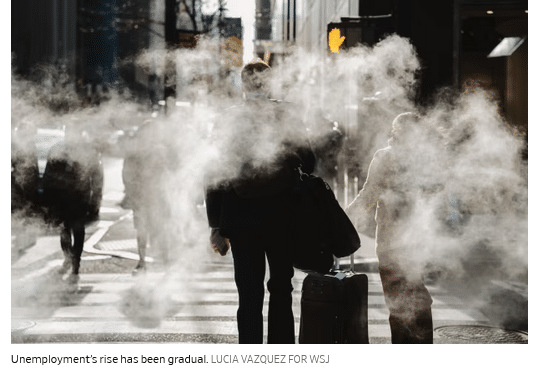
President Trump is clearly frustrated by all the talk of an “affordability crisis.” I don’t blame him. As Thursday’s admittedly distorted consumer-price index report showed, inflation simply isn’t behaving badly.
But don’t define affordability too narrowly. It means not just the prices we pay, but the means to pay them. We may be focusing too much on the first and not enough on the second.
The inflation report was part of a deluge of data released this week, with a delay caused by the federal government shutdown. It also showed unemployment rising, to a four-year high of 4.6% in November, and earnings growth slowing.
Sometimes unemployment rises because a recession is under way. This time, something else is going on. Business leaders I have talked to in recent months are broadly optimistic about growth and pessimistic about hiring, especially their own. As their attitudes percolate down, we could see job security supplant prices in the public’s hierarchy of anxiety.

Prices rose a lot after the pandemic and haven’t broadly fallen since Trump took office, his promises to the contrary notwithstanding. But they are rising pretty slowly. Thursday’s report showed the inflation rate fell to 2.7% in November, the lowest since July, while core inflation, which excludes food and energy, fell to its lowest since 2021.
That report almost certainly understated inflation because of workarounds by the Labor Department’s Bureau of Labor Statistics in response to the shutdown.
Nonetheless, based on the data, you can’t argue that inflation has gotten worse under Trump. Odds are that in the coming year it will get better.
Trump is clearly frustrated that the public hasn’t rewarded him for a pretty good economy, just as Joe Biden was a year ago when growth, unemployment and inflation were broadly similar.
That is because economic anxiety is holistic. People have a nagging feeling that the economy isn’t working for them. That has shown up as anger at the high price of groceries, then the shortage of housing and now health insurance. But part of the equation is the security of your income and that is where the job market comes in.
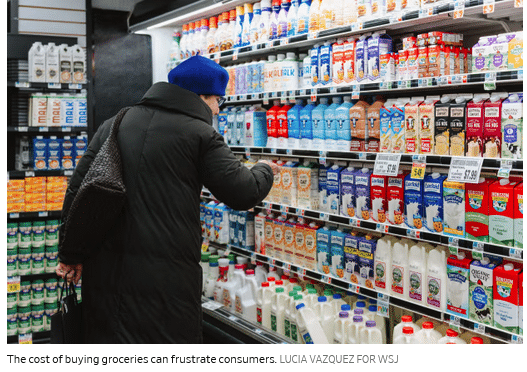
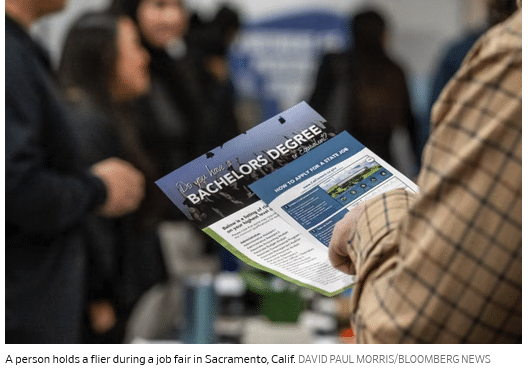
Unemployment’s rise has been gradual and the level is still moderate, yet fragility is amply evident beneath the surface. The number of people working part time who wanted to work more leapt to 5.5 million in November, and is now up 23% from a year earlier. Those unemployed for more than half a year rose to 1.9 million from 1.8 million in September and 1.65 million a year earlier. It may not be a recession, but for anyone trying to find a job, it is starting to feel recession-like.
Meanwhile, average hourly earnings in November were up just 3.5% from a year earlier, the lowest since 2019 if pandemic-distorted figures are excluded. Other data do show firmer growth. But with employers reluctant to hire and unemployment growing, the pressure on wages is likely downward.
The question is why. Economic growth has topped 3% in the second and third quarter, according to the latest estimates. Corporate profits are strong, and the stock market is near record highs.
The labor market is usually closely linked to the pulse of the overall economy. Yet in its latest survey, the Business Roundtable finds that more chief executives plan to cut than add jobs for the third straight quarter, the lowest three-quarter reading since the 2007-09 recession.
One reason for the disconnect between the job market and the broader economy is tariffs. Economists expected them to show up as rising prices for imports. In real life, though, inputs don’t always map neatly to outputs. To cope with higher costs, whether for tariffs, energy, taxes, or health insurance, a business owner looks at all options, which may mean trimming head count instead of raising prices. Maybe it isn’t a coincidence that payroll growth stepped down sharply in the spring, just as Trump’s biggest tariff increases took effect, while the effect on inflation has been muted.
If so, relief is on the way. Tariff rates have stabilized and may actually drop if the Supreme Court rules against some in the coming weeks.
Yet even if the tariff effect fades, other headwinds remain, mostly artificial intelligence. “In three years this has gone from being a novelty party gag to being embedded in all your hiring plans and production,” Federal Reserve governor Chris Waller told executives at an event hosted by Yale University’s School of Management on Wednesday. “The speed at which jobs are going away is what’s frightening, and we are not able to see the jobs that are coming [although] they will come.”
Trump has locked arms with the AI industry. Politically, that could be a liability. Surveys by the Edelman Trust Institute find users in the U.S. are twice as likely to say they reject as embrace the growing use of AI. By a similar margin, they don’t believe business leaders are being fully honest about the impact on jobs.
The conventional wisdom in Washington is that costs will be the dominant issue heading into next fall’s midterm elections. The latest trends on AI and job security hint that the conventional wisdom may have to change.
Read the full article HERE.